Understanding the Application and Versatility of Mandala Art Design Floral Backgrounds
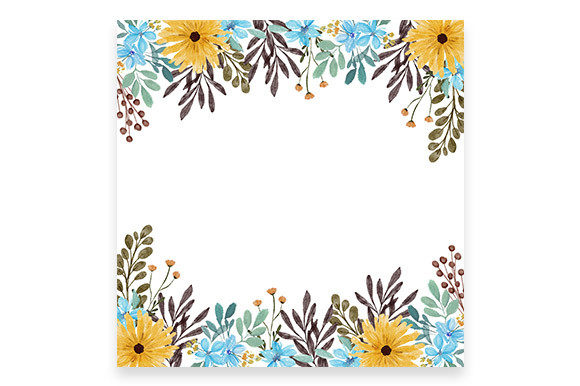
In the realm of digital art and graphic design, the term Mandala Art Design Floral Background refers to a specific type of decorative pattern that combines the intricate, symmetrical structure of a mandala with organic, flowing floral elements. This fusion creates a balanced design that is both geometrically precise and naturally inspired. What makes this design distinct from more generic floral patterns or pure geometric mandalas is its hybrid nature. It offers the symbolic harmony and focus of a mandala—often associated with meditation and spiritual balance—with the aesthetic appeal and softness of botanical illustration. This combination results in a versatile graphic asset that can serve both decorative and symbolic purposes.
Key Characteristics and Design Considerations
A high-quality Mandala Art Design Floral Background typically features radial symmetry, where design elements emanate from a central point. The floral components—which might include leaves, blossoms, vines, or petals—are integrated into this structure, sometimes following the symmetrical paths, sometimes breaking them subtly to add natural variation. This careful balance is a primary consideration for users. A design that is too rigidly geometric may feel sterile for certain projects, while one that is too loose and floral might lose the defining mandala structure. Evaluating a design involves looking at this interplay.
The canvas size of 1920px by 1280px, as commonly offered, is a practical dimension for digital use. It provides a high-resolution base suitable for web banners, desktop wallpapers, or as a large-scale element in print projects without pixelation. However, users requiring significantly larger formats for physical printing, such as for large murals or banners, would need to assess whether this base size provides enough detail for scaling up, or if they require a design with an even larger native canvas.
Comparing File Formats: Flexibility Versus Convenience
One of the most critical aspects of utilizing a Mandala Art Design Floral Background is the available file formats. Each format serves different needs and tools, and understanding their trade-offs is essential for selecting the right resource.
Editable Vector Formats: AI, EPS, SVG, and DXF
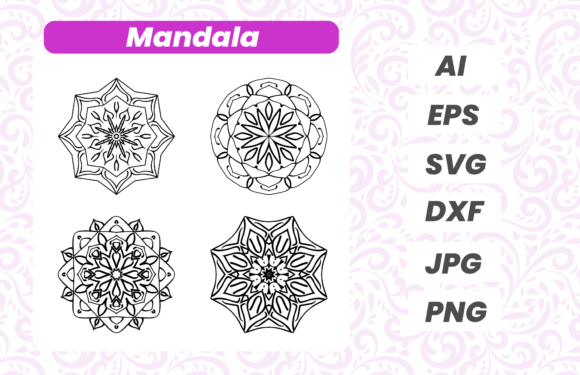
These formats are the core of the design's promised flexibility. AI (Adobe Illustrator) and EPS files are industry-standard vector formats. SVG (Scalable Vector Graphics) is a web-friendly vector format. DXF (Drawing Exchange Format) is often used with CAD software but can be accessible for certain engraving or cutting machines.
- Strengths: Vector files are mathematically defined, meaning they can be scaled to any size without loss of quality. They allow for complete deconstruction of the design—colors can be changed, individual floral elements can be separated, layers can be rearranged, and the overall composition can be edited. This is ideal for branding projects where the design needs adaptation, or for physical fabrication like laser cutting where paths need to be precise.
- Trade-offs: Working with these files requires software like Adobe Illustrator, CorelDRAW, or Inkscape, and a degree of vector editing skill. For a user whose primary goal is quick, simple placement, the learning curve or software cost might be a limitation.
Raster Image Formats: JPG and PNG
JPG and PNG files are the ready-to-use, flat image versions of the design.
- Strengths: They are universally compatible. PNG files, particularly with transparency (if offered), are invaluable for overlaying the design onto other backgrounds in digital compositions. They are immediately usable in software from Microsoft Word to complex video editors without specialized knowledge.
- Trade-offs: They are fixed-resolution. The 1920x1280 dimensions are final; scaling up will cause blurriness. Editing is also limited to overall color adjustments or cropping, not element-level manipulation.
The inclusion of all six types—AI, EPS, SVG, JPG, PNG, DXF—addresses a wide spectrum of use cases, from professional graphic design to hobbyist craft projects. When comparing options, a bundle offering only raster images would be less suitable for a user planning significant customization, while a product offering only a single vector format might not serve a user needing a simple PNG for a website.
Identifying the Right Fit for Your Project
Determining whether a pre-designed Mandala Art Design Floral Background is the right choice depends heavily on your project's requirements, your skill level, and your time constraints.
When This Resource is an Optimal Choice
This type of design asset is particularly well-suited for several scenarios. First, for projects needing a harmonious, decorative base quickly. For instance, a wellness website needing a calming header background, or a yoga studio creating event flyers. The design provides immediate aesthetic value without the time investment of creating a complex mandala from scratch. Second, for crafters and makers who use digital designs for physical products. The DXF and vector files can be paths for etching onto wood, cutting from vinyl, or printing onto fabric, with the floral elements adding a marketable, natural beauty. Third, for designers who appreciate the structure but want a starting point for customization. Having the layered vector file allows them to alter color schemes to match a client's brand palette or extract specific floral motifs for other uses.
When Alternative Approaches Might Be Necessary
There are situations where a pre-made design might not be the best fit. If your project requires a completely unique, one-of-a-kind mandala with specific symbolic elements not found in floral libraries, commissioning an artist or creating it yourself would be necessary. Similarly, if the required style diverges significantly—for example, a project needing a hyper-realistic photographic floral background rather than an illustrative pattern, or a mandala based on stark, minimalist geometry—then this specific blended style would be inappropriate. Another consideration is scale: for massive print projects like building-sized murals, even a 1920px source might require a custom-created design at a much higher native resolution to maintain detail.
Practical Comparisons and Final Decision Factors
In practice, choosing between a Mandala Art Design Floral Background and other resources involves weighing a few concrete factors. Compare the depth of editability you need. Does your project require changing the core structure, or just placing a beautiful image? The multi-format bundle caters to both. Consider the symmetry versus naturalism balance. Some mandala backgrounds are purely geometric; others are loose floral wreaths. This design sits in between. If your project leans more towards one extreme, explore alternatives that specialize in that direction.
Assess the technical compatibility. If you primarily work in software that doesn't open AI files (like certain free design apps), the SVG or PNG formats become your primary focus. Ensure the provided formats match your toolbox. Finally, evaluate the time and cost equation. Creating a detailed floral mandala from scratch requires considerable skill and hours. A purchased, editable design represents a significant time saving for a moderate cost, making it a efficient solution for many professionals and businesses. For a hobbyist on a very tight budget, however, free, simpler raster images might be a starting point, albeit with less flexibility.
The guarantee that these designs are easy to use and editable speaks directly to a common user concern: avoiding overly complex files that are difficult to manipulate. This assurance suggests the vector files are well-organized, with clean layers and paths, which is a crucial differentiator from poorly constructed vector art that can be frustrating to work with. When researching, looking for such assurances or user reviews commenting on editability can help distinguish between superficially similar products.
Ultimately, a Mandala Art Design Floral Background serves as a bridge between symbolic structure and natural decoration. Its value is unlocked by matching its inherent qualities—the hybrid style, the multi-format delivery, the specific resolution—to the demands of your specific project. By understanding the strengths and limitations of each file type and the design's aesthetic position, you can make an informed decision on whether it is the suitable resource for your creative or professional needs, or if your path leads to a more specialized alternative.