The Art of the Personalized Invitation: From Hand Drawn Florals to Digital Templates
In the realm of celebrations, an invitation is the first whisper of the event, setting the tone and building anticipation. For gatherings like baby showers and bridal showers, where personal connection and aesthetic beauty are paramount, the invitation becomes a cherished keepsake. The digital creation of these pieces has evolved dramatically, moving from purely physical stationery to versatile, editable digital assets. This evolution empowers hosts and designers to achieve a unique blend of artistic flair and practical customization.
The Core Components: Understanding Your Digital Assets
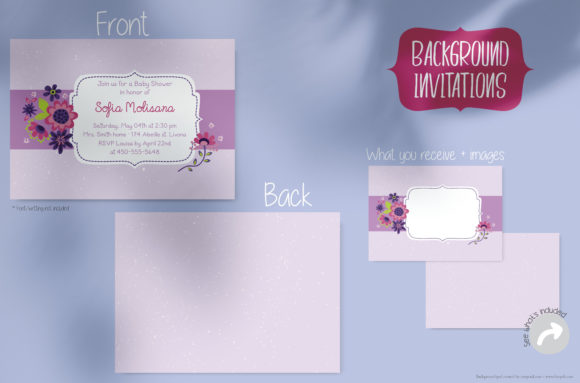
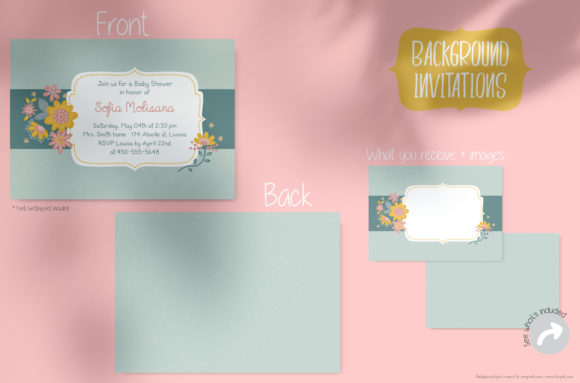
When you acquire a digital invitation template set, such as one centered around a Floral Bouquet, Blue Invitation Template concept, you receive a toolkit. A typical package, as described, includes multiple PNG files with transparent backgrounds at high-resolution 300 DPI. This resolution is crucial for ensuring crisp, professional-quality prints if the final invitation is to be physically mailed.
The file breakdown is logical and designed for maximum flexibility. The "Front original" provides the artist's completed vision, a Hand drawn floral bouquet invitation showcasing the intended design. The "Back all over pattern" offers a cohesive background for the reverse side. The collection of "Images" likely includes individual floral elements, separations, or alternate motifs from the main bouquet, allowing for additional decoration. Most importantly, the "Front blank" and "Back blank" versions are the foundational canvases. These Blank template files are perfect for a baby or bridal shower because they remove the original text but retain all the beautiful artwork, ready for your personal message.
Why Transparency and High Resolution Matter
A transparent background (PNG format) means the invitation design exists without a white or colored base layer. This allows you to place the design onto any digital background color or texture in your editing software, or to print it on any colored cardstock without unwanted borders. High resolution (300 dots per inch) ensures that every delicate line of a hand-drawn floral, every subtle shade in the blue palette, renders perfectly when printed at the specified Invitation Size of 5 x 7 inches. Without this quality, the design would appear pixelated or blurry, losing the intricate details that make it special.
The Workflow: From Template to Personalized Creation
The practical journey from downloading files to sending out invitations highlights the real-world relevance of these digital products. For a professional designer, these assets integrate quickly into client projects. For a hobbyist host, they simplify the creation process. The workflow typically involves selecting an editing tool—software like Adobe Photoshop, Canva, or even free alternatives like GIMP.
You begin with the blank template files. Using the provided font names as inspiration—perhaps you purchase or select similar fonts like Violet Honey Bee for elegant script and Feisty Aries for bold headings—you add your event details. The text layer is placed over the transparent artwork. You might also utilize the separate "Images" PNGs to add extra floral accents around the text or to create coordinating enclosures like reply cards. The all-over pattern back file completes the physical invitation, giving the reverse side a professionally designed look.
Key Considerations for a Successful Result
A few technical and design considerations ensure the final product meets expectations. First, always confirm the color mode; for printing, CMYK is often better than RGB, though many home printers handle RGB files adequately. Second, respect the design's layout. The original mock-up demonstrates text placement that harmonizes with the floral composition; crowding text into areas meant for artwork can disrupt the balance. Finally, remember that the Font, writing mock-up is not included; the listed fonts are a guide to the aesthetic, but you have the freedom to choose any typeface that matches your event's personality.
The Advantages of a Digital Template Approach
Compared to ordering fully printed invitations from a stationer or using a purely online text-based invitation service, this hybrid digital-template method offers distinct advantages. The primary benefit is control. You have the ability to make last-minute changes to date, time, or wording without incurring extra costs or dealing with a third-party's turnaround time. It also fosters uniqueness. While the Hand drawn floral bouquet invitation artwork is professionally created, your personalization choices in text and color adjustment make the final piece distinct.
From a cost perspective, it is efficient. A single digital purchase can often be used for multiple events—the same blue and floral template could be adapted for a baby shower with pastel text and later for a bridal shower with metallic script. The environmental impact can also be reduced, as you print only the exact number needed. For business owners, such as small stationery shops or event planners, these templates become a scalable product base, allowing them to offer customized invitations to clients without needing to illustrate each one from scratch.
Applications Beyond the Expected
While the description highlights baby and bridal showers, the use cases for a beautiful, editable template extend further. Educators might use them for prestigious academic ceremonies or fundraiser galas. Researchers could adapt them for symposium or conference invitations, where a touch of elegant design elevates a professional event. The Blue Invitation Template with its floral motif, being gender-neutral and serene, is equally suitable for anniversary parties, retirement celebrations, or even corporate wellness events seeking a softer, welcoming aesthetic.
The separation of artwork and text also opens doors for multimedia use. The individual floral bouquet PNGs, with transparent backgrounds, can be extracted to create digital graphics for email invitations, website banners, or social media event pages, ensuring brand consistency across all communication channels.
Observing Trends in Digital Invitation Design
The market for digital invitation assets reflects broader trends in design and consumption. There is a growing appreciation for the "hand-drawn" aesthetic, as it conveys warmth, effort, and artistry in a digital world. Consumers and professionals seek designs that feel personal and less generic than standard template library options. The specificity of a Floral Bouquet, Blue Invitation Template indicates a move towards niche, mood-based designs rather than purely category-based ones.
Furthermore, the provision of both original and blank files caters to a spectrum of users. Some users need inspiration and a starting point (the original), while others demand complete creative freedom (the blank canvas). This inclusive approach demonstrates an understanding of diverse user needs. The note that Files are received without watermark is essential, speaking to a professional transaction where the buyer obtains full, unobstructed rights to use the purchased asset, which is a key expectation for serious creators and businesses.
In essence, these digital invitation templates represent a powerful convergence. They marry the timeless, tactile appeal of illustrated stationery with the flexibility and immediacy of digital tools. They empower anyone, from a passionate hobbyist preparing for a loved one's shower to a busy professional event planner, to create invitations that are not merely functional announcements, but beautiful, meaningful opening acts to life's special celebrations.