Floral Line Art Clipart: The Quiet Power of Minimalist Beauty
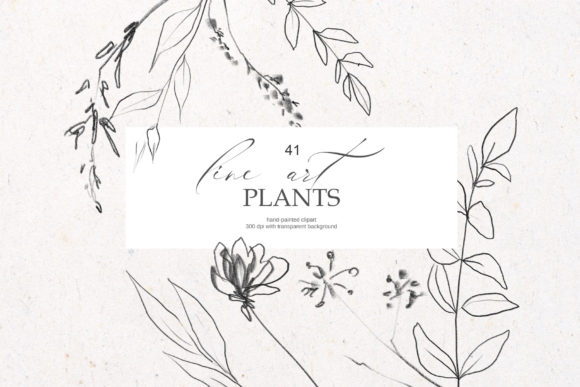
Imagine you’re designing a wedding invitation. The text is perfect, but it feels a bit stark. You don’t want a loud, full-color bouquet dominating the page; you need something elegant, something that whispers rather than shouts. This is where floral line art clipart enters the picture. It’s not a photograph of a flower. It’s an essence—a delicate hand-drawn outline of a eucalyptus branch, a simplified contour of a rose, an abstract watercolor wash suggesting petals. It’s the art of subtraction, leaving only the most graceful lines and forms.
Why So Many Creators Are Turning to Line Art Florals
If you’ve spent any time in the worlds of digital design, stationery, or branding lately, you’ve noticed this shift towards minimalism. The busy, ornate patterns of the past decade are giving way to cleaner, more serene aesthetics. Floral line art clipart sits perfectly at this intersection. It provides organic, natural beauty without clutter. For the blogger creating highlight covers for their Instagram stories, a single line-art lavender sprig can frame a topic like “Self-Care” with subtle sophistication. For the entrepreneur drafting a logo for their new wellness brand, a hand-drawn leaf offers a symbol of growth that feels personal and crafted, not corporate.
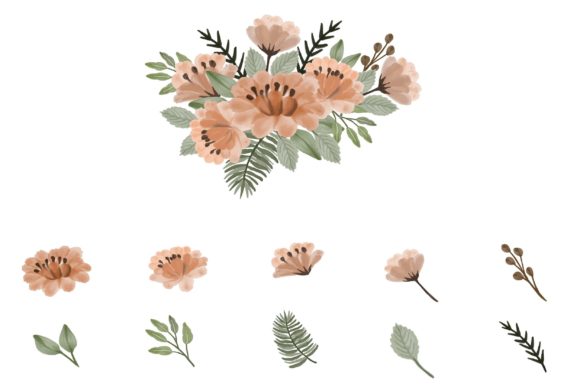
The practical magic lies in its versatility and ease. Because these are typically provided as separate files with transparent backgrounds—like the 41 files mentioned—they become digital building blocks. You aren’t wrestling with a rigid, complex image. You’re moving, scaling, and layering independent elements. A freelancer might pull a few eucalyptus stems to create a border for a client’s website banner. A hobbyist making digital scrapbook pages can weave the same flower clipart through a family album, creating a cohesive visual thread.
Real-World Uses: From Personal Projects to Professional Brands
Let’s move beyond “it’s versatile” and look at specific situations. A small business owner, perhaps running a local candle shop, needs to refresh their packaging. A vibrant, photorealistic garden scene might clash with their product’s muted tones. Instead, they use abstract watercolor clipart of blossoms as a subtle watermark on their labels and tags. It conveys a natural ingredient story quietly, aligning with a minimalist brand identity.
Consider the educator designing materials for an online course on botany or mindfulness. Full-color images can be distracting in a PDF guide. Delicate hand-drawn plants serve as elegant chapter dividers or illustrative accents that support learning without overwhelming the text. The clarity of line art communicates effectively.
For personal projects, the application is deeply relational. Someone creating a greeting card for a friend going through a tough time might choose a simple line-art daisy. Its unadorned beauty feels sincere and empathetic, more personal than a generic stock photo. Similarly, fabric prints for DIY tote bags or tea towels gain a modern, artistic feel with these patterns, moving away from traditional, dense floral prints.
What to Think About Before You Download or Use
While floral line art clipart is remarkably adaptable, a little forethought ensures it serves your specific purpose. First, consider scale and composition. These elements often work best as accents or repeated patterns, not necessarily as massive central graphics. A logo might use one small, perfect flower. A wedding invitation backdrop might involve a scattering of tiny, repeated elements.
Second, think about color. Many clipart collections come in black-and-white line art or with muted watercolor tints. This is a feature, not a limitation. It means you can easily recolor them in your design software to match any palette—from stark monochrome for a modern poster to soft pastels for a baby shower card. The separate file format (like 300 dpi PNGs) ensures this recoloring is clean and professional.
Finally, reflect on the style cohesion of the collection itself. Does the new collection featuring eucalyptus and flowers have a consistent hand-drawn feel? A mix of sharply geometric and loosely organic line art might clash within a single project. A cohesive set, however, allows you to mix and match elements—a eucalyptus branch with a tiny bud—while maintaining a unified aesthetic across your invitations, cards, and banners.
The Unspoken Benefit: Saving Time Without Sacrificing Quality
For marketers, publishers, and busy creators, time is a precious commodity. Crafting custom illustrations for every project is often impossible. High-quality floral line art clipart bridges this gap. It offers ready-made artistic elements that still feel bespoke because of their minimalist, hand-drawn nature. You aren’t using a common, overused stock photo; you’re applying a flexible art asset that you can manipulate uniquely for your brand.
This is crucial for branding identity. A consistent visual language builds recognition. By employing a selected set of floral line art elements across your social media highlight covers, your website graphics, and your stationery, you create a subtle, recognizable brand atmosphere. It’s a more affordable and achievable path to a custom feel than commissioning original art for every new application.
The outcome is a design that feels intentional and calm. In a digital landscape often crowded with visual noise, the quiet presence of delicate plants and flowers in line art can make your project, whether a DIY gift tag or a professional logo, stand out through simplicity. It meets the modern desire for clarity, authenticity, and beauty that doesn’t overwhelm. That’s the real power hidden in those simple lines—they give you the natural world, distilled into its purest form, ready to enhance whatever you’re creating.